Hijra & Transgender Studies
Situated ethnography of gender-diverse communities and the politics of recognition.
Feminist Scholar · Bangladesh
Professor of Anthropology, Jahangirnagar University · PhD, Auckland University of Technology, Newzealand
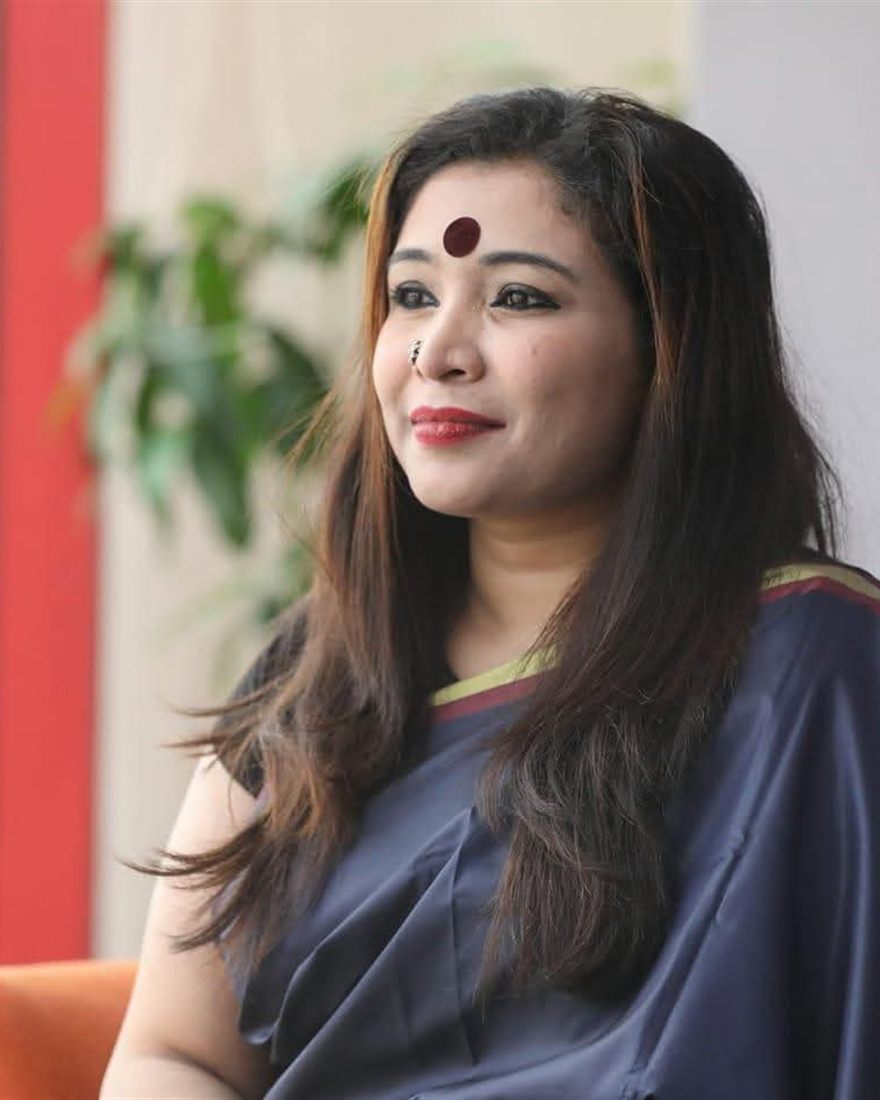
Ethnographic explorations at the threshold of gender, body, and sexuality.
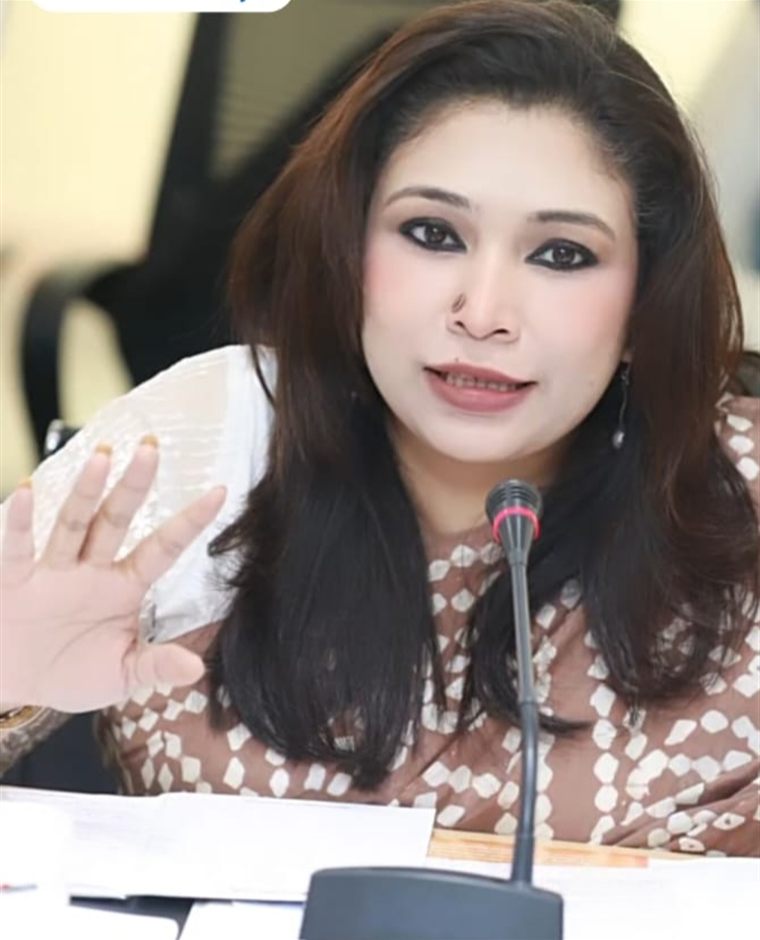
Dr. Rezwana Karim Snigdha is a feminist scholar, gender expert, and public intellectual whose work has shaped critical conversations on gender, sexuality, embodiment, and social justice in Bangladesh and beyond. With over fifteen years of experience in teaching, ethnographic research, training, and advocacy, she is currently a Professor of Anthropology at Jahangirnagar University. She earned her PhD in Social Sciences from Auckland University of Technology (AUT), New Zealand, in 2021. Her doctoral research, Beyond Binaries: An Ethnographic Study of Hijra in Dhaka, Bangladesh, has been internationally recognised for its nuanced and grounded exploration of gender diversity, identity, and belonging in South Asia.
While widely known for her pioneering work on gender and sexuality, her scholarship extends across gender justice, body politics, reproductive health, medical anthropology, health sociology, climate vulnerability, and the everyday experiences of marginalized populations.
Dr. Snigdha is an active member of several national and international academic and policy networks, including the Sex Tech Lab at The New School, New York; the World Anthropology Union (WAU); the International Union of Anthropological and Ethnological Sciences (IUAES); the Canada–Bangladesh Social Justice & Research Alliance; the Duke of Edinburgh’s Award Foundation; and the Kapaeeng Foundation. She also serves on the Trustee Board of the National Child Welfare Trust and the Research Committee of the National Youth Development Institute, reflecting her commitment to linking scholarship with public service and social transformation. A respected scholar within the global academic community, she serves as an international reviewer for leading journals, including the Journal of the Royal Anthropological Institute (JRAI), Asian Women (SSCI and Scopus indexed), Journal of Homosexuality (Taylor & Francis), and Contemporary South Asia (Routledge).
Beyond academia, Dr. Snigdha is a prominent public voice on issues of gender, democracy, culture, and social change. As a frequent television commentator, keynote speaker, and public intellectual, she brings anthropological insight to wider audiences, bridging rigorous scholarship with public debate, policy engagement, and advocacy for a more inclusive and equitable society.
A decade and a half of fieldwork across the entanglements of gender, health, media, and the body in Bangladesh and beyond.
Situated ethnography of gender-diverse communities and the politics of recognition.
Reading power, labour, and selfhood through the lives of women in urban Bangladesh.
How bodies perform, resist, and remember — from everyday life to mass movements.
Health discourse, care, and the governance of bodies in South Asian contexts.
Reproductive health and resilience among women in salinity-stressed coastal Bangladesh.
Truth, rumour, and broadcast across the border in a fractured media landscape.
City life, class, and the making of the middle-class self in Dhaka.
Rights, access, and silence around SRH for women and gender-diverse people.
Across fifteen years at Jahangirnagar University — and as part-time faculty at North South University — Dr. Snigdha teaches at both undergraduate and graduate level, supervising MSS and MPhil theses in gender, sexuality, and medical anthropology.
Foundational theory and ethnography of gender, sexuality, and the politics of difference.
Health, the body, care, and the governance of populations in South Asian contexts.
Fieldwork design, participant observation, reflexivity, and writing ethnography.
Hijra and transgender lives, hegemonic masculinities, and the anthropology of recognition.
Feminist epistemologies and their application to the study of society and the self.
Religion, media, and political change in contemporary Bangladesh.
Books, chapters, and peer-reviewed articles. Filter by type.
Snigdha, R. K. · Dhaka: Oitijhya · 320+ Google Scholar citations
Snigdha, R. K., & Zohra, F. T. · Jahangirnagar University Review: Social Science, 49(1)
Snigdha, R. K. · Jahangirnagar University Review, 47(1)
Snigdha, R. K. · Jahangirnagar University Review, 47(2)
In A. Hussain (Ed.), Contemporary Issues in Social Science (pp. 93–107) · Jahangirnagar University
In P. Mandal et al. (Eds.), My City, My Home (pp. 195–198) · Sampad South Asian Arts & Heritage
Snigdha, R. K. · Global Journal of Human-Social Science Research, 19(5), 29–36
Recent invited lectures, keynotes, and conference presentations across three continents.
Invited virtual lecture, International Programs
Public keynote on body politics & rights
Conference presentation
Gender, body & ethnography in South Asia
Feminist anthropology of the region
Conference presentation
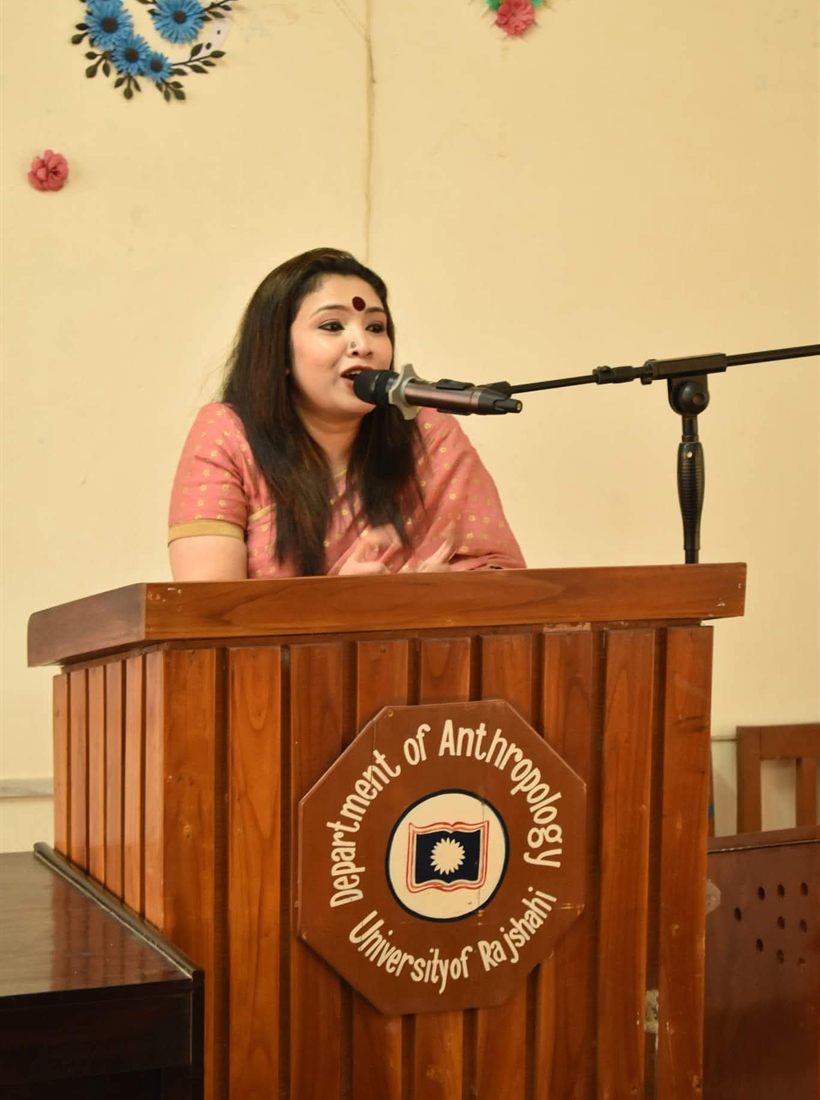
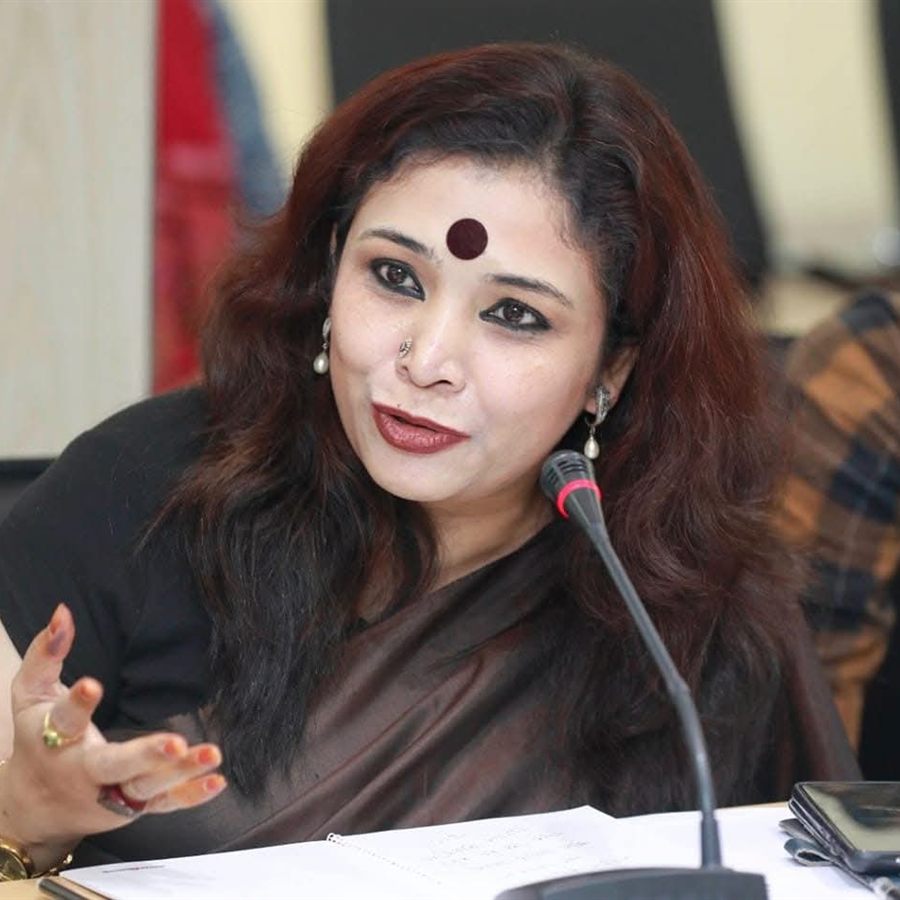
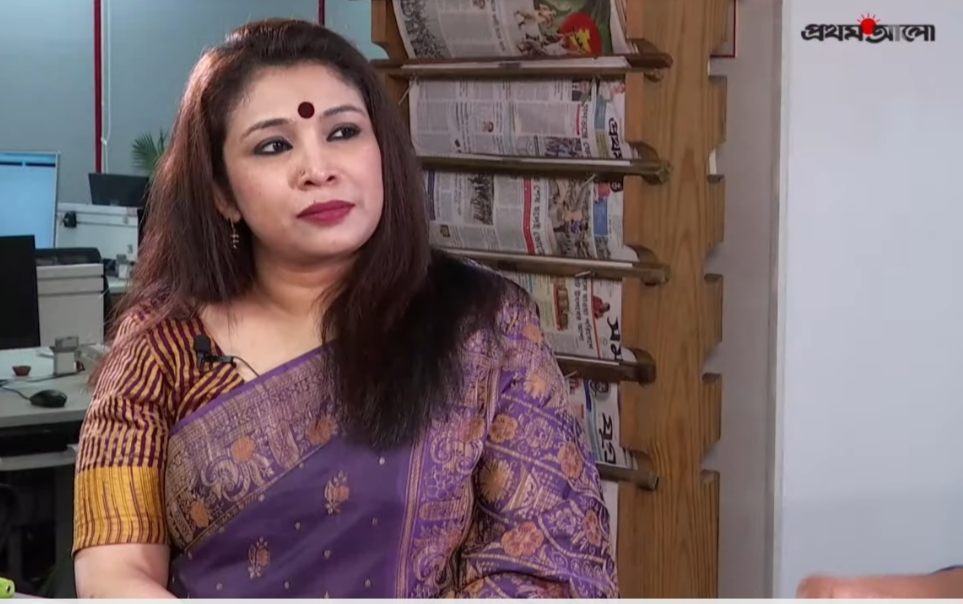
Interviews, features, keynotes, and broadcast commentary translating ethnographic research into public debate.
Sexual & reproductive health of women in the salinity-stressed coastal belt of Bangladesh — a multi-year study at the intersection of climate vulnerability and gendered care.
Sub-Project ManagerBody performativity in the July Movement 2024, Dhaka — how protest, presence, and the body became language during a defining political moment.
Project DirectorAwarded a competitive Higher Education Acceleration & Transformation grant — placing among the top 10.2% of proposals nationally.
Principal InvestigatorBeyond research and teaching — a record of national and international recognition, scholarly gatekeeping, and institutional leadership.
Workshops, courses, and capacity-building programmes conducted for academics, practitioners, and civil society organisations.
For collaborations, supervision, talks, or media on gender, anthropology, and Bangladesh.
rezwana@juniv.edu